About Me

So far, I write about what ever holds my attention the most stubbornly. For the most part we're just doing reviews, but occasionally other things will pop-up as well.

Featured Post

Black Reconstruction by W. E. B. Du Bois

My first post here is of course a Goodreads review, but one of my favorite and the only one that won't show-up on the book's entry p...

Showing posts with label favorite films. Show all posts

Saturday, June 7, 2025

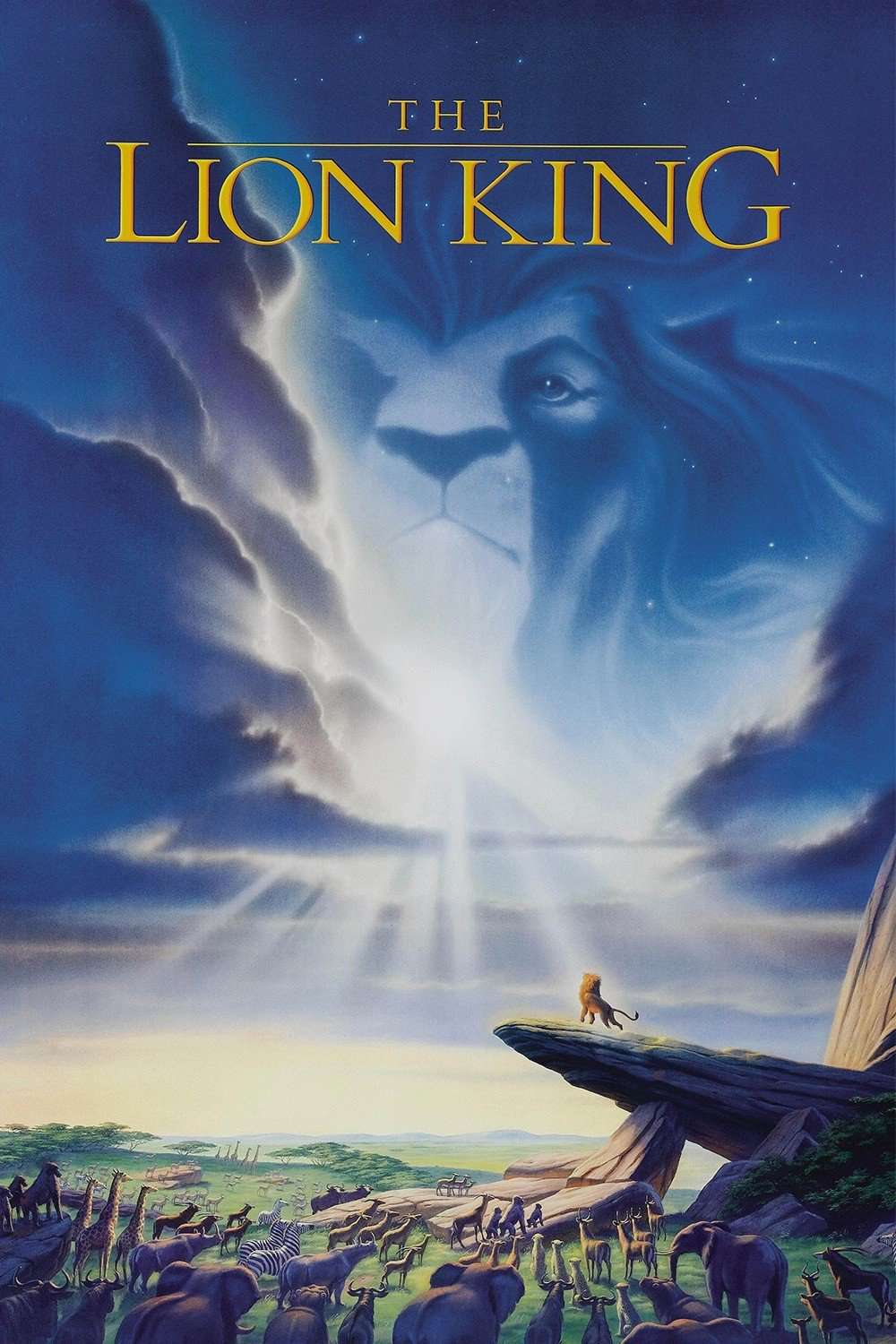
My Review of The Lion King (1994) directed by Rob Minkoff & Roger Allers

When I was 4 years old, the earliest film I remember seeing in the movie a movie theater was The Lion King, It was the Marlow Heights Community Theater and I went to the upstairs theater with my mom and we sat in the theater. I will always remember the stampede scene and how it felt to 4 year old me when the sound made the whole theater shake and I felt it and the impact of that never left me. It was the moment when the movies became real to me.

This movie came during the legendary Disney Renaissance and was pitched as Bambi in Africa. It merged Kimba the White Lion with Hamlet along with Pan-African and Biblical themes. It is three acts where we see the hero's journey of Simba as he goes from crown prince to prince-in-exile, to finally defeating his evil uncle and earning his father's inheritance. The music here is some of Disney's most memorable and Timon & Pumbaa would become the breakout characters getting their own tv show and a spin-off movie re-telling the events of this film from their points-of-view a la Rosencrantz & Guildenstern Are Dead. The KiSwahili phrase "hakuna matata" entered the English-language lexicon based on the song from this film. 

The voice acting in this film has to be the best assemblage of actors from this era. This is the defining James Earl Jones character for my generation (imagine how confused I was when I saw Coming To America (1988) and Star Wars for the first time). Jeremy Irons as Scar was as diabolical a sounding villain as you can imagine. The hyenas were one of the more controversial features to the movies when they were initially introduced as they reminded certain folks of the crows from Dumbo, but you can't deny that Whoopi Goldberg, Cheech Marin, and Jim Cummings brought their A-game as henchmen. Nathan Lane and Ernie Sabella as Timon & Pumbaa are again the breakout stars of the movie. 

I can't think of anymore to say than that this has been the only Disney Renaissance movie that I still come back to 31 years later. It is a defining part of my experience as a cinephile as it is for me the defining origin point of my relationship with cinema. 


Monday, May 19, 2025

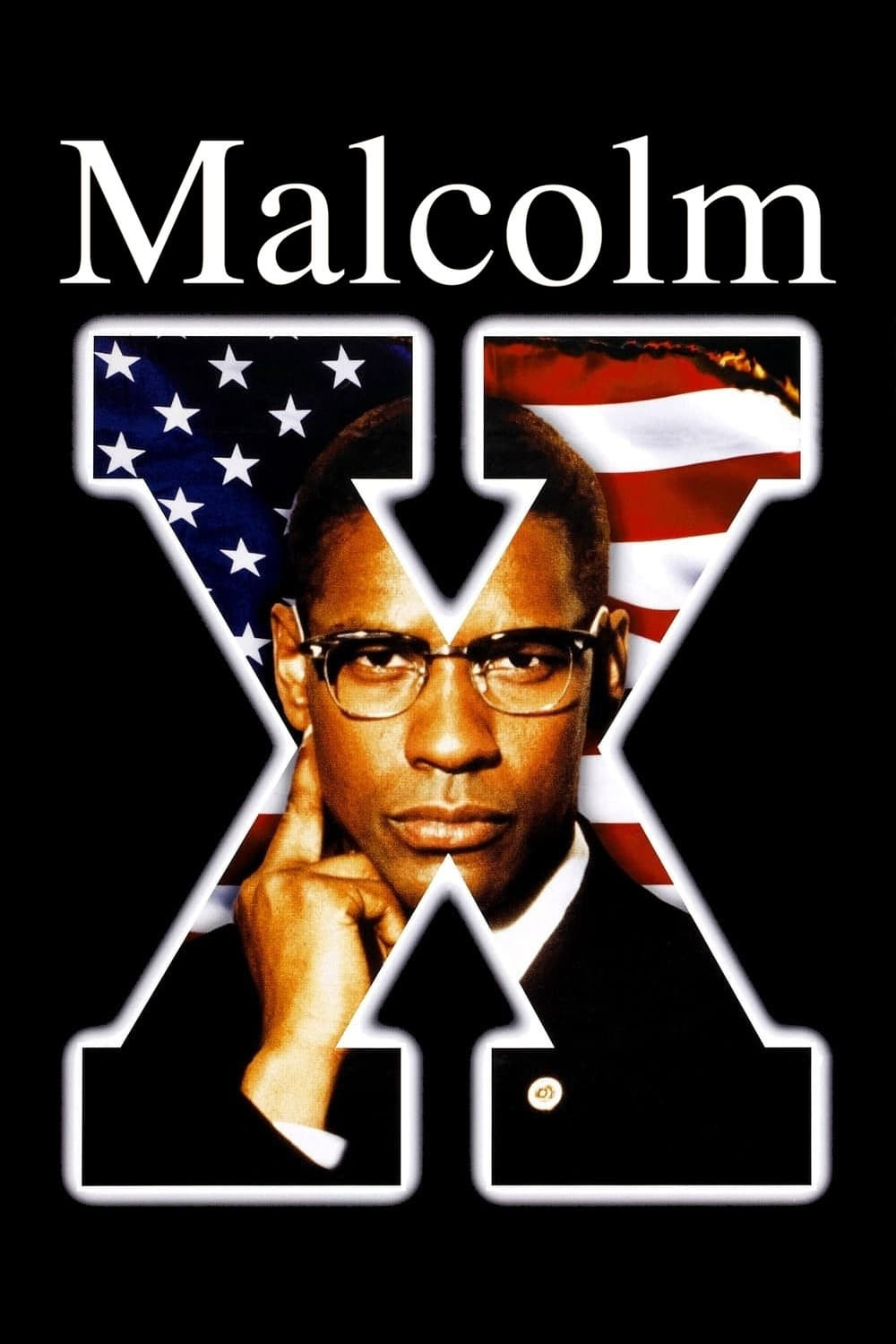
My Review of Malcolm X (1992) directed by Spike Lee


 Happy 100th Birthday to Omaha, Nebraska's own El-Hajj Malik el-Shabazz, better known to the world as Malcolm X. Few figures have become so influential without being able to be co-opted by the establishment—though it is not because folks haven't tried. James Baldwin details in his book The Devil Finds Work how Hollywood tried to get him to write a watered-down screenplay for an aborted adaptation of X's autobiography which thankfully Baldwin pulled out of. In 1991 Hollywood tried to do another adaptation with Norman Jewison at the helm, but Spike Lee caught wind of this and was able to take control of the project and make the greatest biographical film of all time and possibly Denzel Washington's greatest starring role.

This movie saw the last team-up of Spike Lee and his legendary cinematographer Eric Dickerson and it is their crowning achievement. All of the Lee/Dickerson signature shots are here in top form and all set pieces are absolutely beautiful. Nearly the whole 40 Acers stable of actors & crew. Ruth E. Carter wardrobe design is so accurate that you would've thought she was there. We get supporting actors like Delroy Lindo who has been keeping busy in 2025 is shows that he has been an expert character actor for a long time. Angela Basset plays Betty Shabazz like she was born for the role. Hell, even Spike Lee does a good job and shows why he is the best acting-director. But obviously there is one actor who shines above the rest...

Denzel Washington was no rookie before this film and this not his first Spike Lee film, but I still don't think any role he has played has been better and more important than this. Honestly, I don't know who else could've rise to the occasion to play this role other than Malcolm X himself. Quite a few people have played Malcom X in movies and television since Denzel, but none get the role as dead-on accurate as he does. He said that he spent hundreds of hours listening to as many speeches and footage of Malcolm that was available and it shows. I don't know of anyone in a film biography more take on a role so completely as Denzel Washington did and he truly makes me forget that I am watching an actor whenever I watch this movie.

I don't know what else is there to be said. Spike Lee made the best biographical film adapted from the greatest autobiography ever written. It is a three-act epic of the life of a man who has influenced countless people (including myself) into a more in-depth pride of themselves and their Blackness. I don't know what else to say but to quote from Ossie Davis' eulogy of him: 

"Malcolm was our manhood, our living, black manhood! This was his meaning to his people. And, in honoring him, we honor the best in ourselves...However we may have differed with him – or with each other about him and his value as a man – let his going from us serve only to bring us together, now."

Thursday, September 23, 2021

My Review of Seven Samurai (1954) directed by Akira Kurosawa

 Seven Samurai (1954) is one of the greatest movies of all time. It pretty much invented the language of the action film and the posse film. It is also one of my top 5 films. This is a film that ask what we fight for in life. This film takes place at the end of the Sengoku era as 100 years of disunited civil war was being replaced with unification and a re-establishment of feudalism under the samurai-class. According to the film, the action specifically takes place during 1587 when the Japanese government under Toyotomi Hideyoshi was involved in the Kyushu Campaign to unite the last of the main Japanese islands. While this is going on, a coalition of 7 ronin (master-less samurai) come together to defend a village from bandits. This movie is a swan song to the sort-of co-mingling of different social classes in Japan before the Tokugawa-era ends that forever. This movie has everything in it--it meditates on everything and it still is filled with action and drama. It was the start of Kurosawa's re-imagining of the samurai film and it is still the benchmark of any film that shows a bunch of heroes coming together to save the day.

As I stated in my review of Twenty-Four Eyes, 1954 was the greatest year in the history of Japanese cinema: if one made a list of every acclaimed Japanese film that year it would make an essential cinema list (Ozu missed out). The fact that this film was supposed to have come out a year earlier, but was delayed because the weather and Kurosawa's perfectionism was near-divine fate. While this film was ranked the third best film by Japanese critics for 1954, this has easily been the most celebrated film internationally of that year. 

When reviewing a film like this, one does not know where to begin or end so I'll just bring it all to a close here.

Tuesday, February 2, 2021

Princess Mononoke (1997) directed by Hayao Miyazaki

 "I am not attempting to solve the entire world's problems. There can never be a happy ending between humanity and ferocious gods. Yet, even amidst hatred and carnage, life is still worth living. It is possible for wonderful encounters and beautiful things to exist. I will depict animosity, but that is in order to show the fact that there is something more precious. I will depict the bondage of a curse in order to show the joy of liberation. What I will show is the boy reaching an understanding of the girl, and the process of the girl's heart opening up to the boy. In the end the girl may say to the boy, 'I love you, Ashitaka. But I can't forgive human beings.' The boy will smile and say, 'that's alright. Won't you live together with me?' 

This is the kind of film I want to make." – Hayao Miyazaki's April 19, 1995 pitch for Princess Mononoke


How The Sun First Rose on "Japan"

This film is neck-and neck with Castle in the Sky (1986) for my favorite Hayao Miyazaki film. This film was the first of many of Miyazaki's "final films." This film has one of the fiercest female protagonist of his his movies up to that point and along with Miyazaki's environmentalist themes, had a strong look at Shinto spirituality and an amazing allegory of the founding of that country that we call Japan.

An Emishi boy, a civilization of Yamato settlers and iron workers led by a female warlord who is an amazing call-back to the female antagonist of Nausicaä of the Valley of the Wind (1984), and the various forest kami–especially wolf kami–that have taken a human girl dressed in Jōmon-era clothes as their own interlock with each other over the land and each other's existence during the early Muromachi period. From these three mutually-hostile groups will be the creation of we now call "Japan." San aka the titular Princess Mononoke represents not simply the natural world but, pre-historic Japan at it's roots—symbolized by her Jōmon clothes; the antagonist Lady Eboli represents represents the contradictions of modern civilization and the brutality of the Yamoto conquest of the islands that they would call Nippon: she's kind to all the outcast of that era of society, but she takes all her rage on the land and the kami that live in it. In the middle is the co-protagonist Ashitaka who represents the Emishi not so ancient as the Jōmon, but one of the ethnic groups that resisted easy assimilation or subjugation to the Yamoto hegemony: they were until the end (or beginning depending on how you look at it) of the Muromachi period offering an alternative to what we now think of as "Japanese culture" on the main island of Japan—much closer to the land than the Yamoto, but still a human civilization. This movie reminds me of Maya Angelou's On The Pulse of the Morning, but in a Japanese context. Nobody has a reason to trust one another—and all the reasons to destroy each other. But it is shown in  the little moments that when they do work and relate to each other with compassion, they can make great things happen. Tragically greed, prejudice, and a simple lack of understanding means that history will eventually play out…as tragedy.

It is amazing how beautiful the artwork is here—95% hand-drawn (this was the first Studio Ghibli film to use CGI). Miyazaki closed out the 20th century (and what he thought was his career) with this film: Princess Mononoke is a true masterpiece of not simply anime, but animation cinema as a whole. There wouldn't be another film of this caliber for me until Your Name (2016) almost 20 years later.
Tuesday, October 20, 2020

My Review of Pulp Fiction (1994) directed by Quentin Tarentino

 Being born 10 years before the 21st century, few films dominated the pop-culture landscape of my childhood like Pulp Fiction (1994). This film was one of the defining cinematic achievement of Generation X, and the definitive post-modern film. Many of the defining traits of Tarentino's film-style would be codified here and possibly one of the best film roles of Samuel L. Jackson. Three simple morality tales told out-of-order and with no film score of its own, but using the film's soundtrack to layer the atmosphere of the film. The movie told a story about America that Hollywood was not quite sure it wanted to hear at the time. 

For all the violence in this film, it is amazing that the majority of the movie is gangsters contemplating the world and their navels. Though at its heart it is a gangster/noir film, much of Tarentino's love for 70s film culture (e.g. blaxploitation, Japanese New Wave, 70s horror) is the body of the film. Like a certain other indie film-maker on the other side of the country, the influence of Martin Scorsese is apparent throughout. I'm not sure this film is as good as Django Unchained (2012), but it is a masterpiece. And yes, in a movie with so much murder and a rape scene, the n-word scene is the overkill, the film rises above that flaw. Also, this film lost the Best Picture Academy Award to Forrest Gump (1994)—how folks still take the Oscars seriously I'll never know.

Saturday, October 17, 2020

My Review of The Trial of Joan of Arc (1962) directed by Robert Bresson

 I can't remember the exact day I watched this film for the first time. All I remember was that it was late at night I was thinking of going to bed and I started doing some last minute channel surfing on the TV, when I ended-up on the TCM channel just as this movie was starting. An hour later I was stunned by what I had seen. I was a Joan of Arc fan for the next 24 hours and a Robert Bresson fan for life.

This movie was my introduction to Robert Bresson and a form of art film I call "grown folk cinema." It was clear that Bresson is not messing around with the standard theatrics of most movies and went for a minimal approach to how his "models" (his name for the actors in his films) went about their roles. There is a quiet aggression that is spell-binding to watch. The script for the movie is adapted directly from the transcript of the actual trial of Joan of Arc as well as her posthumous rehabilitation trial 25 years later after the 100 Years War had turned decisively in favor of France. Along with the obvious religious themes of the movie, this film is a study judicial corruption and kangaroo courts/show trials; this film came on the eve of the Women's Liberation Movement in the West and right after France lost the Algerian War (literally 2 months, a lot of themes of this movie about the military's over-reach had real-life parallels in that war). The memorable performance of Florence Delay really draws you into the movie and the character of Joan and makes you really consider the person who could be a teenager and yet command an army.

I can't say whether this movie is the best introduction to the films of Robert Bresson, but it was my introduction to and it is the shortest of his major films. This film shows you how am unjust criminal justice system or an overzealous wartime tribunal acts regarding the rights of anyone they insist on putting to death. This film revealed to me a whole new way of films. Also, note that the only "music" heard in the film are drum and horns at the beginning and drum rolls at the end.

Tuesday, August 4, 2020

My Review of A Touch of Zen (1971) directed by King Hu

I can't say I know how or why one reads or watches something and knows it's special. It just leaves you in an ethereal space feeling elevated. That was my feeling when I first watched A Touch of Zen (1971). I had watched so many martial arts movies: the films of Kurosawa, the Zatoichi films, Shaw Brothers, Golden Harvest, etc. But when I watched this movie about the decade ago, I knew I had seen something special, something on a higher level. This film did what only the films of Kurosawa--specifically Seven Samurai(1954)--had done. It had took the Chinese martial arts film to the level of high-art.

This movie, like Dragon Inn (1967), uses the era of Ming China and the abuses of the East Chamber (aka Eastern Depot) Group to commentate against The Bond films and on the civil power (wén 文) and the military/marital power ( 武).

Dong Chang (the Eastern Depot) was a special service organization during the Ming dynasty, one of the most powerful and vicious secret police forces in all of the history of China. Answering directly to the emperor, the Eastern Depot was controlled and directed by the eunuchs of the court. It had license to arrest and execute any member of the populace, up to and including highly placed ministers of the court, without having to clear it through any administrative or judicial departments of the government. It is not too much to say that the power of the Eastern Depot exceeded that of the modern Gestapo, and the very mention of its name was enough to cause innocent people to shake in their boots.

My films A Touch of Zen and the earlier Dragon Inn both have to do with the nefarious ways of the Eastern Depot. The James Bond films were all the rage at the time, a trend of which I did not quite approve. To my mind, whatever the purpose of a secret service organization, when it becomes too powerful, it is bound to be harmful to the people. Of course, much of the action in the James Bond stories was sheer fantasy, but they were nevertheless extremely popular and could not but exert an unsanitary influence. For this reason, in A Touch of Zen I sought to expose some of the evil deeds of an organization such as the Eastern Depot. - from King Hu's press release at the 1975 Cannes Film Festival

Dragon Inn and A Touch of Zen  both serve to illustrate what happens when the balance of there two is not balanced. This film  also uses Buddhism, Confucianism, Daoism, and Legalism in a way that I have seen no other Chinese martial arts movie ever do (not even The 36th Chamber of Shaolin). The religious and spiritual aspects of this film are especially remarkable for how they are balanced out by the secular and, of course, fighting (the most famous and influential fight scenes in all of wuxia film history) sequences. The longest of the films in this King Hu "trilogy (if you include his two previous films), it is basically 3 movies in one that moves from ghost story to political intrigue/thriller to religious symbolism all while being a wuxia film throughout.

The opening of this film is remarkable because it is in a action film where no one speaks for the first 8 minutes. This is a marital arts film where the first punch is thrown for about 56 minutes. The music score is inverted from where we started with Come Drink with Me (1966) in that it leans more to Western-style orchestrations, but still uses Chinese classical music and Opera tropes as leitmotifs. The pace of the movie is much more laid-back than with Dragon Inn or any other Chinese martial arts film I have ever seen. Despite the pacing, it keeps you involved throughout the story.

We find a single Confucian scholar that lives in an abandoned military fort with his mother who wants him to take the civil service exam and marry; he also works in town as an artists. Our scholar sees things like the Ming civil service as a waste of time as he is under the influence of Confusions and Legalist philosopher Zhuge Liang. A mysterious man comes to town asks the scholar-artist for a portrait, but becomes very obsessed with the relatively new doctor in town. The scholar then finds an equally mysterious woman who has moved in next door to him in the abandoned fort.

We see Shih Chun in his second King Hu film--not as a badass fighters, but as a naive scholar who has to learn what his place in the world and life itself is truly about. Of course the stand-out acting is by Hsu Feng with the coldest, piercing stare this side of Ice Cube. Feng's presence as the cool and mysterious xianü (female fighter) here is incredible and she stamps her place as one of the greatest actresses in the history of action films. The Eastern Depot returns as the evil antagonists  and their commander is played by Han Ying-xie who is the fight choreographer/action director for this film and the big bad of this movie (the scariest of King Hu's villains). While the eunuch from Dragon Inn was stronger, Commander Xu Xian-chun in A Touch of Zen smarter and intimidating on another level. One of his personal attendants is played by Sammo Hung who would be Han Ying-xie's successor as fight choreographer on King Hu's films. The leader of the Buddhist monks is played by Roy Chiao (who ironically was a Christian in real-life).

The exact date of the film's action is uncertain, but based on the historical record this takes place after the events of Dragon Inn. The context and background of this film is the Donglin Reform Movement that saw attempts by Confucian scholars and bureaucrats to embark on anti-corruption campaigns in the Chinese imperial civil bureaucracy. In particular, this movie takes place during the reign of the Tianqi Emperor when the eunuch  Wei Zhongxian attempts to suppress the Donglin Movement by purging several of its leaders including Yang Lian, whose assassination/execution kicks-off the events of this this film. This is used as a subtle way to critique the imbalance of wu over wen, the political oppression going on in the Chinese-speaking world at the time, and to critique the James Bond films. Of course, the character of Gù Shěng-zhāi is a critique of the arrogance and hypocrisies of the intelligentsia during this the late 60s-early 70s.

A Touch of Zen is an interesting look at trying to understand the balances of civil and military authority; the balance of tradition and innovation/progress; how relentless people's greed is, and suggesting that there may be a way out of this vicious cycle with a touch of...well you get it. This is one of those films that, despite its length, I could watch on repeat  forever. For all the films I have seen with Shaolin monks and Buddhism, none have used spirituality as seriously as this film. All of the questions of conflict, suffering, and evil give way to a moment of transcendence that few films in this genre have ever been confident enough to do.

Friday, July 10, 2020

My Top 5 Movies

View this post on Instagram

These are my top 5 favorite films. These films represent in different ways my ideas or have affected my understanding of art. • • The films, not ranked in any order favorite (left to right; top to bottom): A Touch of Zen (1971); Seven Samurai (1954); Stalker (1979); The Godfather (1970); Medicine for Melancholy (2008). I've made this kind of posts before, but now I have physical copies of all the films. I also recently found a site called @letterboxd that is a sort-of Goodreads with movies—it is ok, but one does not get the full features of a Goodreads unless you pay for the "premium" features. Fortunately, I'm only in my early stages of using it and don't yet require anything beyond the free features of it since I'm still new to the site. Here is my post of this list: https://embed.letterboxd.com/ken_74/list/my-top-5-films/detail/ #top5 #movies #movie #film #cinema #moviecollection #atouchofzen #sevensamurai #stalker1979 #thegodfather #medicineformelancholy #kinghu #akirakurosawa #andreitarkovsky #francesfordcoppola #barryjenkins #pelicula #peliculas #criterioncollection #janusfilms #cinephile #cinephilenoir

A post shared by Ken's Bookshelf & Movieshelf (@kenbookshelf) on