About Me

So far, I write about what ever holds my attention the most stubbornly. For the most part we're just doing reviews, but occasionally other things will pop-up as well.

Featured Post

Black Reconstruction by W. E. B. Du Bois

My first post here is of course a Goodreads review, but one of my favorite and the only one that won't show-up on the book's entry p...

Showing posts with label Yasujiro Ozu. Show all posts

Wednesday, May 21, 2025

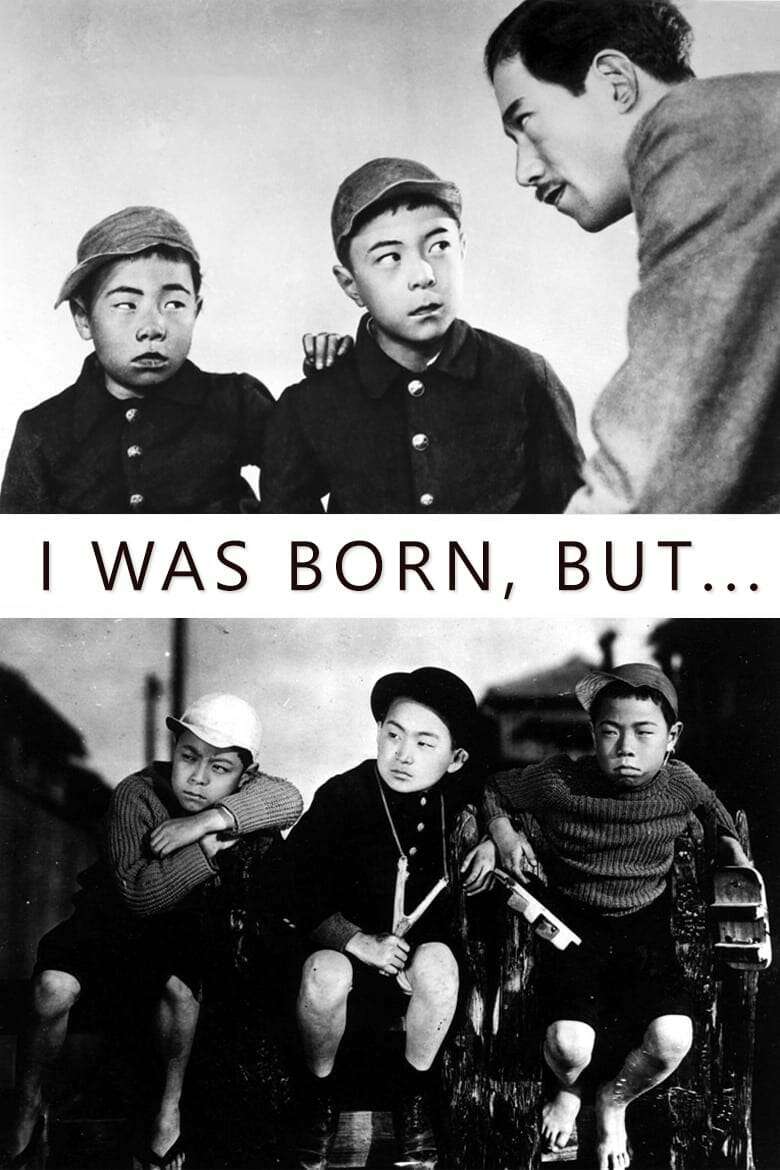
My Review of I Was Born, But...(1932) directed by Yasujiro Ozu


 The most celebrated of Ozu's prewar comedies and it is one of his most pessimistic films. Two boys move with their dad to a new neighborhood and as they make their way up the social ladder, they learn that their dad is a lacky for his boss—who just happens to be the father of one of their new friends who they are fighting for top dog status with. The first part of the movie is a silly comedy where the two brothers really use all the crazy boys-tricks to deal with a bully and climb up their elementary school social circle. The second half is the more dark, bittersweet part of the movie where the boys realize the true nature of their father's position in the company where he works and it wakes them up to how the world of adults work and how what their daddy says and what he does can be so different.

This has the beginning of a lot of the Ozu trademark shots. We do have a lot more tracking shots and not every shot is three feet above the ground, but it is certainly being refined. We don't have the full on shots of every person talking yet, but it is getting close. Young Mitsuko Yoshikawa as the mom is very fine-looking.

My Review of A Straightforward Boy (1929) directed by Yasujiro Ozu

This is a 14 minute excerpt of Ozu’s first of his kids comedy films. It is basically his adaptation of the short story The Ransom of Red Chief by O. Henry. It plays into what you expect of the screwball comedies of the era and looks very unlike an Ozu film as we think of them today.

Sunday, May 18, 2025

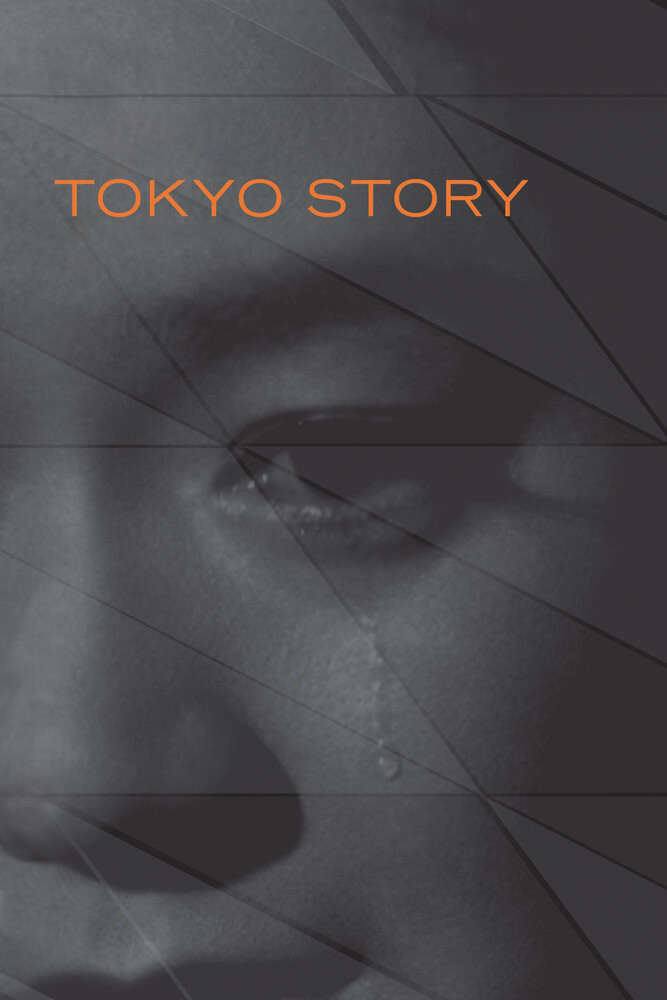
My Review of Tokyo Story (1953) directed by Yasujiro Ozu


 When I tried to review Seven Samurai it was a nerve-wrecking undertaking because not only was it one of the greatest films of all time, but one of my personal top 5. While this is also a masterpiece film, I feel less pressure so I can critique a little easier. This film came early on in Ozu's legendary postwar run, but is rightly hailed as him at the height of his powers. He takes all the themes and feelings close to him and, with his top lieutenants Chishū Ryū and Setsuko Hara in top form (along with an incredible performance by Chieko Higashiyama), made his defining statement on life in modern Japan. I can't say it is a film I watch often, but it is one that sticks with you with its crushing sadness.

The generation conflict reaches its balance here. We get the look at both parents and children being mutually put-off by each other with the exception of the youngest daughter and war -widowed daughter-in-law. Besides them, all of the other kids come off as absolute villains. Of course, the father is also shown to not be a saint either (once again Chishū Ryū is playing a character way older than him). Hara as the daughter-in-law is a solider here—both for her in-laws in the movie and Ozu as an expert actress. Kyoko Kagawa (an actress who was an Akira Kurosawa/Kenji Mizoguchi main-stay) is used as the audience surrogate as the youngest daughter. She is the obvious future that this movie can maybe-optimistically point to.

Setsuko Hara in the foreground; Yasujiro Ozu at the far right.
I personally prefer the happier bittersweet film Early Summer (1951) when it comes to Ozu family dramas, but I can't deny the reason this is considered by the usual critics as one of the greatest films ever made. After watching The Only Son (1936) before re-watching this film and I am amazed at how much Ozu re-used some of the same locations shot-for-shot. Surprisingly, there is a panning shot in this film—though it is a short one as this movie has shaped what most people think of when they think about Ozu films. It is fairly melodramatic for an Ozu film, but it works in all the right ways. 

I doubt I will watch this film too many more times given how soul-crushing it is even when compared to other sad films, but I am glad to have watched it at least twice. 

Saturday, May 17, 2025

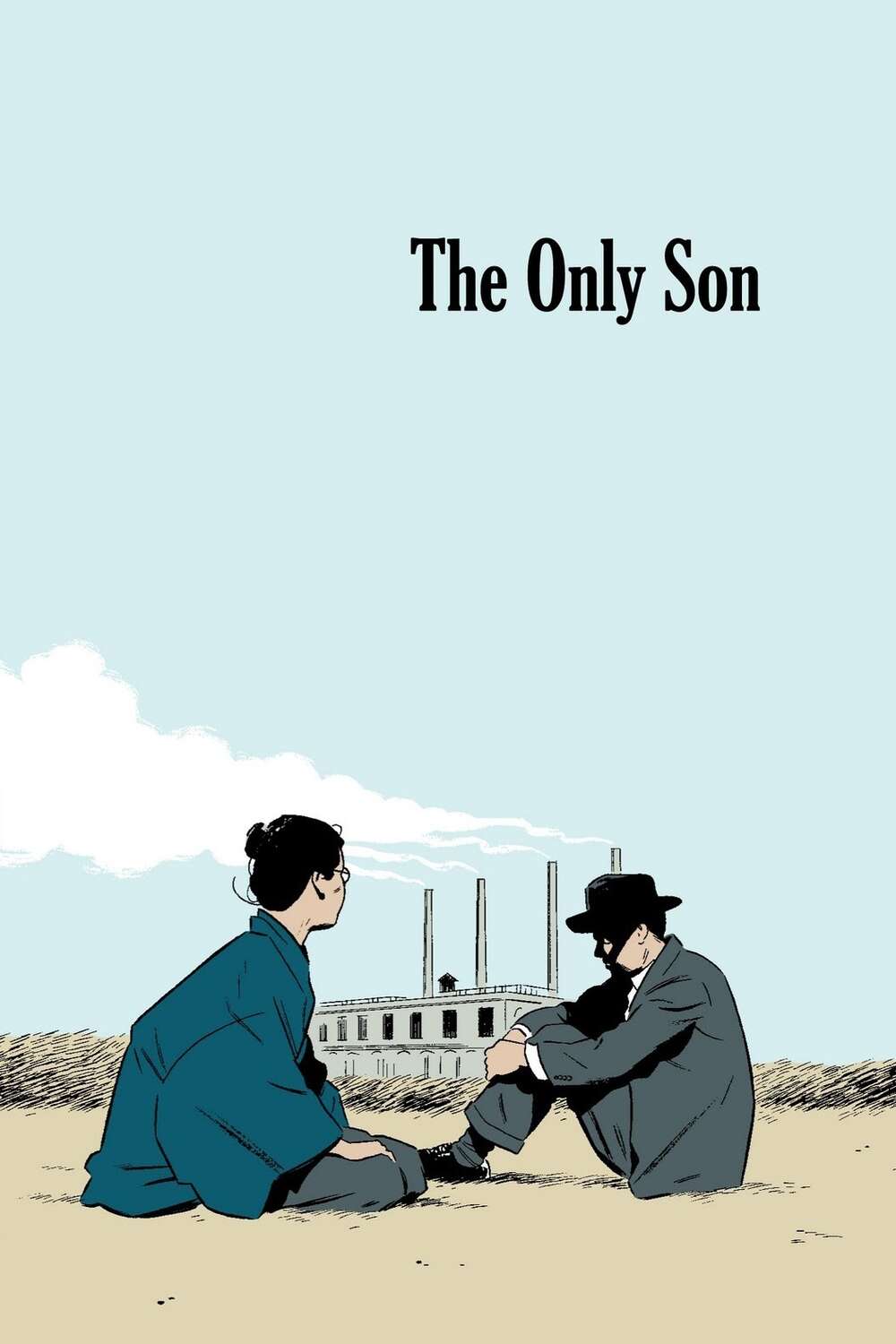
My Review of The Only Son (1936) directed by Yasujiro Ozu


 Ozu's first sound film is a look at a family on the brink following The Great Depression. Despite the end of feudalism and the beginning of capitalism (and imperialism) in Japan following the Meiji Restoration—not everyone benefited equally as the modern class structure replaced the feudal one. We follow a poor single mother working in a factory to provide for her son all the way to his adulthood and the trials that the two deal with over the course of the film.

While the film begins during the Taishō era (1923) in a country village in the middle of Japan, it quickly time-skips to 1935 Tokyo in the middle of the Great Depression. The son has moved to Tokyo and got a job as a school teacher, but the Depression wiped out his earnings just as he became a husband and father. When his mother decides to visit him in Tokyo, she is shocked and (he ashamed) to see him and his family living in the ghetto in destitution. We spend the rest of the film watching both mom and son try to make sense of it all.

Being that this is an early Ozu film, things are a bit different from his post-WWII films. Form-wise, not only do we get tracking shots, but a full on fantasy/dream sequence at one point. Theme-wise, the big issue causing the conflict is not postwar Westernization, but the Depression itself. A lot of the generational conflict in Ozu's prewar films after 1929 comes from the economic down-turn.

The main appeal of this film is that it is the rare Ozu family drama where it is an adult son who is the focus rather than a daughter or child-son. He never did this again after the success of Late Spring (1949), but in the prewar films we get to see Ozu experiment a little. While the ending here does foreshadow the ending of Late Spring—it is made even more pitiful in hindsight knowing that our characters would not have a peaceful future, but a bloody one to look forward to.

Wednesday, September 29, 2021

My Review of Late Spring (1949) directed by Yasujiro Ozu

Yasujiro Ozu's career can be divided up quite neatly: there's everything before Late Spring and everything he made after it. Though Tokyo Story (1953) is his masterpiece, this film marked the turning point in his career where his post-war style crystalized and the majority of his greatest films were made. Ozu had spent the majority of his films up to this point exploring generational conflict in Japanese families—mainly with The Great Depression as the back-drop. Starting with this film he would use the aftermath of WWII as the back-drop to exploring these conflicts and this movie set the tone of it involving a daughter being matched-up for marriage by her family. It all begins here with the story of a widower and his single daughter named Noriko.

The synopsis is that a widowed father and his young adult daughter Noriko are living happily together in post-WWII Japan. When an aunt decides that Noriko needs to get married before she gets "too old" (i.e. 30), it kicks-off the drama of the film as the daughter was happy were she was at and had no thought of getting married. The conflict is started by the aunt, but is really between the father and daughter as they struggle to understand their place in this "new" Japan. Though one could speculate what Ozu's thoughts on the characters' motivations, it never 100% certain who is truly right (though in the world of 2021 it would make more sense that the woman's opinion is the most important, this was not so in 1949). The ending is one of the most quietly devastating endings I have seen in a movie solidifying it as one of the great father-daughter movies. 

This film would kick-off the first of the many "Noriko" films of Ozu that would involve this female character (usually, but not always, played by Setsuko Hara) caught over whether she should get married (Hara would play a Noriko in Tokyo Story, but the circumstances of that movie are very different). These films would provide variations of Late Spring and some would be remakes. When Ozu found a story he liked, he stuck with it over-and-over. It is amazing how many angles he examined this topic from 1949 until his last film An Autumn Afternoon (1962).

We need to talk about the two main actors. Setsuko Hara was for Yasujiro Ozu what Toshiro Mifune was for Akira Kurosawa. She was Ozu's primary actor and no actor performed more dedicatedly for him than her. The father in the film is played by Chishū Ryū—who was for Ozu what Takeshi Shimura was for Akira Kurosawa. They were part of the Shochiku stock character ensemble. It is interesting to see these two actors, both established actors in the Japanese movie industry by 1949, as they were approaching their creative peaks. Ryu was, as always, playing a character older than he was since he was "old-looking" by design. 

Ozu was well-known by now for his camera-style and it is what most folks know about him at first glance. He shot most of his angles at near-ground level and he liked to put scene transition elipses in his movies. At this point he also had eliminated 99% of tracking shots in his movies. His career-long relationship with cinematographer Yūharu Atsuta helped make this style so iconic.

I don't know if more can be said on this film at this point. In a world where a woman's right over her body is still highly contested, this film was the beginning of Ozu's decade long examination of it in Japanese society. Though Ozu is certainly not the proto-feminist that his contemporary Kenji Mizoguchi was and definitely not the feminist that Kinoshita would turn-out to be in the early 1950s, he reflects part of a conversation that Japanese society was having in the post-WWII era about what place women (who got the franchise after the war) would have in it and what rights they could expect. 
Saturday, October 10, 2020

My Review of Early Summer (1951) directed by Yasujiro Ozu

 I am careful about how I talk about Yasujiro Ozu because he is prime hipster/weebo-bait. His "strangeness" and his adoration by Western critics make it hard to properly critique his films. It's even worse if you are a big fan of one of his contemporaries like myself😉. His static seat-level shots, his post-war near-elimination of tracking and panning shots in his films, and his full on framing of actors, places, and his use of transition shots as temporal ellipses have been analyzed to death–so I will skip it here. That gives me the chance to talk about the story which like most of Ozu's filmography deals with generational conflict and drama in a changing (Japanese) society.

Most folks might think that Ozu only dealt with domestic drama, but that's not true. What is true is that regardless if it is pre- or post-1945, Ozu's dramas tend to carry very similar themes (this is especially the case after Late Spring (1949)). Having watched Late Spring, Tokyo Story (1953), and An Autumn Afternoon (1962) for example have shown that when he found a story he liked–he used it and Early Summer does not break this trend. In his 1930s dramas it was The Great Depression that became the underlying catalyst for conflict; in his post-WWII films it was the Westernization of Japan that spurred conflict between the younger and older generations.

The plot of the film is one of the numerous variations on the plot of Late Spring. A woman named Noriko (played by Setsuko Hara) is unmarried and living with her best life with her family when a visiting uncle suggests that it is time for her to get married and drama ensues from there. One big issue that comes up is the changing status of women in postwar Japan. This is something that one would expect with Kenji Mizoguchi more than the more traditional-minded Ozu. The "debate" (in the Ozu sense of the word) is whether the family playing match-maker for Noriko is acceptable for her as a modern Japanese woman. In 1949's Late Spring, the unmarried woman is forced to marry her family's choice of husband against her wishes and has little say in the matter. In Early Summer (made just  two years later), not only does the daughter not marry the man the family has picked for her, but she ends up marrying a man they don't approve of. During the course of these events we learn a good deal about the goings on about middle-class Japanese society at this time. I think the theme in this and others of Ozu's films about family separation has to do with the  trauma of the war years.

One interesting thing about this movie was seeing Chishu Ryu playing a character (Noriko's brother) that was his actual age. Ozu always had Ryu play older male characters–even when he was in his early 20s. So it is uncanny to see Ryu in his 40s, playing someone in their 40s (just two years later, he was playing the elderly patriarch in Tokyo Story). Setsuko Hara would age less dramatically in Ozu's films, but by the late 1950s she would be playing the matriarch roles herself.

As with all his films, Ozu's Zen belief informs the narrative and technical aspects of the film. He uses temporal ellipses to such great narrative-effect that it almost creates an atmosphere of suspense since you don't know where the story is going to pick up after a scene has concluded. His insistence on stressing the impermanence of all things also connects all his films. You can argue that this was one of the most relatively optimistic of his dramatic films–a far cry from the sorrow that loomed over the ending of Late Spring. Early Summer has some optimism for Noriko and her family and Japan's future. It's also interesting to note that the most optimistic of Ozu's dramas has the woman making her own choice.