About Me

So far, I write about what ever holds my attention the most stubbornly. For the most part we're just doing reviews, but occasionally other things will pop-up as well.

Featured Post

Black Reconstruction by W. E. B. Du Bois

My first post here is of course a Goodreads review, but one of my favorite and the only one that won't show-up on the book's entry p...

Showing posts with label Robert Bresson. Show all posts

Saturday, May 17, 2025

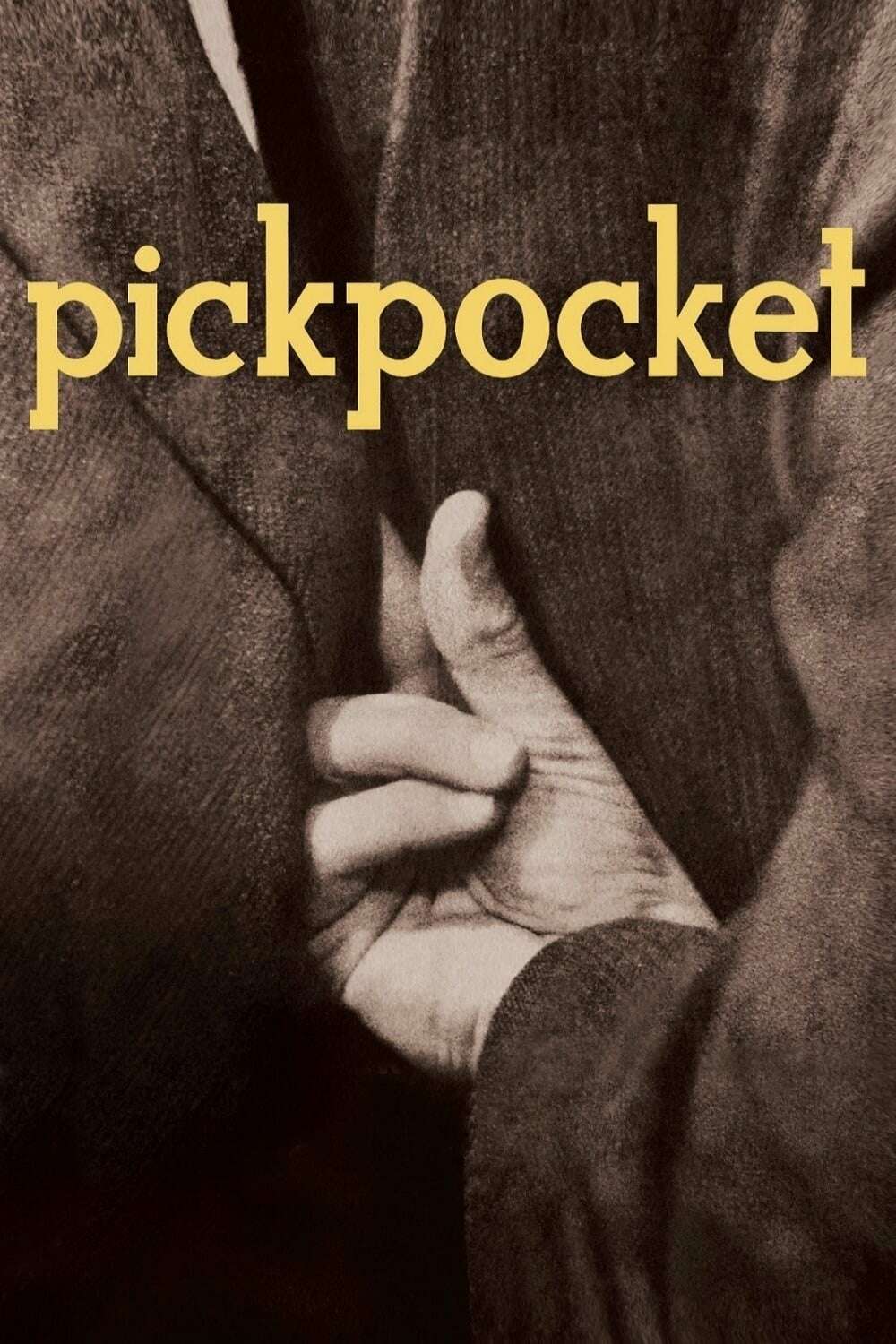
My Review of Pickpocket (1959) directed by Robert Bresson


 I read Crime and Punishment back in 2012, but have seen its influence pop-up everywhere. I recently re-watched Le Havre (2011) whose police officer is borrowed from C&P. Of course one of the most famous adaptations of the novel is Pickpocket (1959). The protagonist Michel is as much an edgelord as C&P's Raskolnikov, but with the trademark emotional detachment that of Robert Bresson's "models" (his term for actors). Michel's god-complex inspires him to become a pickpocketer. The antagonist here—like in C&P—is a detective whose character is a one-to-one adaptation of Dostoevsky's Porfirey and he is always a step ahead of Michel while trying to convince him to give-up his life of crime. Michel's love interest Jeanne is a marked improvement on C&P's Sonia as she can counterbalance Michel without trying to aggressively confront him and she makes up for Michel's lack of humanity. 

The cameo scene of the real-life pickpocket-turned-sleight-of-hand artist Henri Kassagi is my favorite part of the whole movie. Kassagi's character teaches Michel how to pickpocket more effectively and they later team-up with another accomplice to pull more daring pickpocket operations. This features half the background music in the entire film (another trademark of Bresson).

This is one of, if not the most critically acclaimed of Bresson's films and it really is him as he reached the height of his powers. It is the full introduction to 60s Bresson and is the lead-in for the French New Wave that would start right after this movie was released. While I still hold The Trial of Joan of Arc (1962) as my favorite Bresson film, this is still an incredible movie that influenced so many movies after it (and not just Paul Schrader's).

Thursday, September 30, 2021

My Review of A Man Escaped (1956) directed by Robert Bresson

Robert Bresson's films are about people trying to find their way into some sort-of grace or salvation. About dealing with the mystical or god-like in everyday situations and often through dirty or unpleasant means. In this film we find a member of the French Resistance (based on André Devigny) being housed in Montluc Prison while awaiting to be executed during WWII. The fighter (called Fontaine in the movie) is not content to wait for his death and immediately plans to escape, but the Nazis are not about to make it that easy. He now has to make it out of this heavily-fortified prison alive with every move under close watch.

This film is an A to Z of what one gets in a Bresson film. Anonymous actors (who Bresson always referred to as his models) do not act so much as recite the lines with as little emotion as possible. There is a "holy minimalism" in how the action is portrayed in these films (and yes, despite how restrained the actors "models" are, they're the ones that drive the plot). The sparse use of music is another thing that distinguishes this and other movies of Bresson, because of how precise he uses it is use. We get some music during the movie's intro and then none for about 30 minutes until a random scene where the prisoners are emptying their slop jars in the prison yards. He said that he wanted this to represent a precise moment of ritual for the characters lives. This all goes back to Bresson's quest to purge cinema or movies (which Bresson unhelpfully calls "cinematography") of as much of the influence of the theater or plays as possible. That's why he calls his movie actors "models": in his mind actors belong in places like Broadway, film has to have its own language distinct from what came before it. Other directors like Andrei Tarkovsky and Mohsen Makhmalbaf thought on similar lines, but neither took it as far as Bresson to try and remake the basic language and function and cinema as we know it. Even his devoted fanbase of film-makers in the French New Wave were not prepared to "transgress" (though Bresson would probably see it as a purification) in the way that he was.

This film, and all of Bresson's films, is an experience unto itself and you either going to like it or hate it. This is a film about prisoners escaping the Nazis, there were countless films with that plot before A Man Escaped, and have been countless since, but I guarantee none of them look like this.

Saturday, October 17, 2020

My Review of The Trial of Joan of Arc (1962) directed by Robert Bresson

 I can't remember the exact day I watched this film for the first time. All I remember was that it was late at night I was thinking of going to bed and I started doing some last minute channel surfing on the TV, when I ended-up on the TCM channel just as this movie was starting. An hour later I was stunned by what I had seen. I was a Joan of Arc fan for the next 24 hours and a Robert Bresson fan for life.

This movie was my introduction to Robert Bresson and a form of art film I call "grown folk cinema." It was clear that Bresson is not messing around with the standard theatrics of most movies and went for a minimal approach to how his "models" (his name for the actors in his films) went about their roles. There is a quiet aggression that is spell-binding to watch. The script for the movie is adapted directly from the transcript of the actual trial of Joan of Arc as well as her posthumous rehabilitation trial 25 years later after the 100 Years War had turned decisively in favor of France. Along with the obvious religious themes of the movie, this film is a study judicial corruption and kangaroo courts/show trials; this film came on the eve of the Women's Liberation Movement in the West and right after France lost the Algerian War (literally 2 months, a lot of themes of this movie about the military's over-reach had real-life parallels in that war). The memorable performance of Florence Delay really draws you into the movie and the character of Joan and makes you really consider the person who could be a teenager and yet command an army.

I can't say whether this movie is the best introduction to the films of Robert Bresson, but it was my introduction to and it is the shortest of his major films. This film shows you how am unjust criminal justice system or an overzealous wartime tribunal acts regarding the rights of anyone they insist on putting to death. This film revealed to me a whole new way of films. Also, note that the only "music" heard in the film are drum and horns at the beginning and drum rolls at the end.