About Me

So far, I write about what ever holds my attention the most stubbornly. For the most part we're just doing reviews, but occasionally other things will pop-up as well.

Featured Post

Black Reconstruction by W. E. B. Du Bois

My first post here is of course a Goodreads review, but one of my favorite and the only one that won't show-up on the book's entry p...

Saturday, May 17, 2025

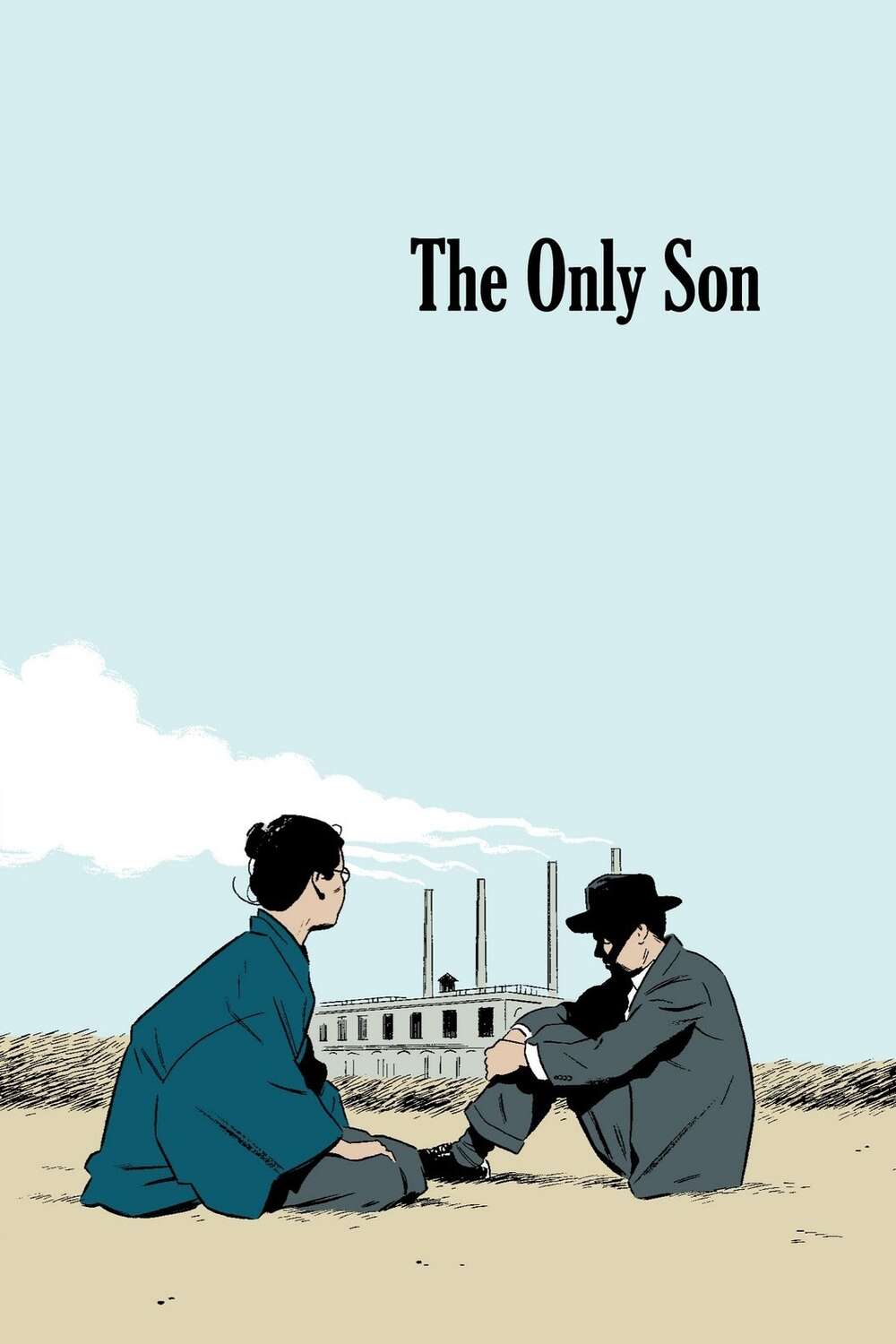
My Review of The Only Son (1936) directed by Yasujiro Ozu


 Ozu's first sound film is a look at a family on the brink following The Great Depression. Despite the end of feudalism and the beginning of capitalism (and imperialism) in Japan following the Meiji Restoration—not everyone benefited equally as the modern class structure replaced the feudal one. We follow a poor single mother working in a factory to provide for her son all the way to his adulthood and the trials that the two deal with over the course of the film.

While the film begins during the Taishō era (1923) in a country village in the middle of Japan, it quickly time-skips to 1935 Tokyo in the middle of the Great Depression. The son has moved to Tokyo and got a job as a school teacher, but the Depression wiped out his earnings just as he became a husband and father. When his mother decides to visit him in Tokyo, she is shocked and (he ashamed) to see him and his family living in the ghetto in destitution. We spend the rest of the film watching both mom and son try to make sense of it all.

Being that this is an early Ozu film, things are a bit different from his post-WWII films. Form-wise, not only do we get tracking shots, but a full on fantasy/dream sequence at one point. Theme-wise, the big issue causing the conflict is not postwar Westernization, but the Depression itself. A lot of the generational conflict in Ozu's prewar films after 1929 comes from the economic down-turn.

The main appeal of this film is that it is the rare Ozu family drama where it is an adult son who is the focus rather than a daughter or child-son. He never did this again after the success of Late Spring (1949), but in the prewar films we get to see Ozu experiment a little. While the ending here does foreshadow the ending of Late Spring—it is made even more pitiful in hindsight knowing that our characters would not have a peaceful future, but a bloody one to look forward to.

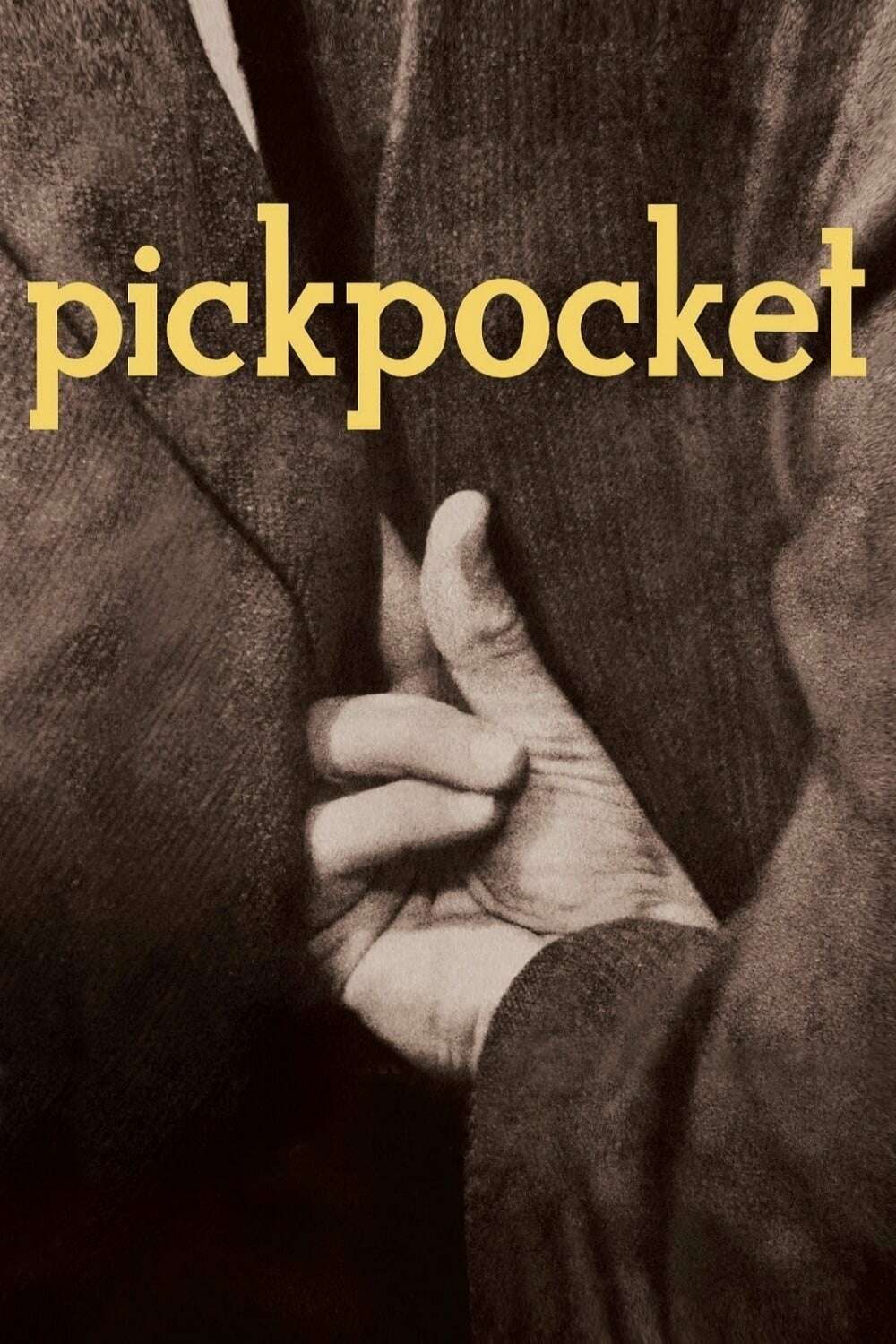
My Review of Pickpocket (1959) directed by Robert Bresson


 I read Crime and Punishment back in 2012, but have seen its influence pop-up everywhere. I recently re-watched Le Havre (2011) whose police officer is borrowed from C&P. Of course one of the most famous adaptations of the novel is Pickpocket (1959). The protagonist Michel is as much an edgelord as C&P's Raskolnikov, but with the trademark emotional detachment that of Robert Bresson's "models" (his term for actors). Michel's god-complex inspires him to become a pickpocketer. The antagonist here—like in C&P—is a detective whose character is a one-to-one adaptation of Dostoevsky's Porfirey and he is always a step ahead of Michel while trying to convince him to give-up his life of crime. Michel's love interest Jeanne is a marked improvement on C&P's Sonia as she can counterbalance Michel without trying to aggressively confront him and she makes up for Michel's lack of humanity. 

The cameo scene of the real-life pickpocket-turned-sleight-of-hand artist Henri Kassagi is my favorite part of the whole movie. Kassagi's character teaches Michel how to pickpocket more effectively and they later team-up with another accomplice to pull more daring pickpocket operations. This features half the background music in the entire film (another trademark of Bresson).

This is one of, if not the most critically acclaimed of Bresson's films and it really is him as he reached the height of his powers. It is the full introduction to 60s Bresson and is the lead-in for the French New Wave that would start right after this movie was released. While I still hold The Trial of Joan of Arc (1962) as my favorite Bresson film, this is still an incredible movie that influenced so many movies after it (and not just Paul Schrader's).

Friday, May 16, 2025

My Review of Through the Olive Trees (1994) directed by Abbas Kiarostami

 This is Abbas Kiarostami-ception reaching its peak as at one point we see the actor who played Kiarostami in And Life Goes On (1992) being directed by another actor who is playing "current" Kiarostami in Through The Olive Trees (1994), who are both being directed by the actual Kiarostami
(who makes a blink-and-you-miss-it cameo in the movie). This is some peak-Iranian New Wave. This movie is our finale of the Koker Trilogy and takes us behind the scenes of the interpersonal drama happening during the filming of And Life Goes On (1992).

This big contention is that two of the actors in one scene of ALGO were involved in a dispute where the guy—Hossein Rezai (what is it with Kiarostami and dudes named Hossein?)—wants to marry the girl—Taherah Landanian—playing his wife, but her family is firmly against it. This causes problems for for Kiarostami as she is ordered not to talk to Rezai and this brings filming to a halt. Such a story would be a sub-plot for in most films, but is the main thrust of this film. Hossein Rezai is a traicomic character in the style of that other Kiarostami-Hossein: Hossein Sabzain of Close Up (1990). While Sabzain's unrequited love was cinema itself, Rezai's unrequited love is Tahereh who is a bit naïve and vain and not average from what we see of her—yet Rezai really keeps you rooting for him, however hopeless his quest feels The open-ended ending reinforces that it was the journey, not the destination, that this film is highlighting as we bring our journey through Koker, Iran to a close.

And touching back on that, through-out this film we have had Babak Ahmadpour and his brother as side characters. Babak starred in the first film of the Koker Trilogy and the search to find out if he was alive after the 1990 earthquake in Koker was the whole reason for the second film in the trilogy. After confirming that he is still alive in the first 15 minutes of this film, the overall-plot moves on from him rather seamlessly and you would not know how important he was to Kiarostami's canon if this was the only film in the trilogy you had watched. Life Goes On, indeed!

Monday, May 12, 2025

My Review of American Fiction (2023) directed by Cord Jefferson

 I am so glad to finally be able  to have seen this movie. As a Black bibliophile and cinephile this movie taps into two lanes. A movie which is a direct satirical attack on institutionalized racism in the book publishing industry. It is also the story of a man from an upper-middle class New England family that has just about fallen-apart as he tries to get another lease on life and career.

American Fiction (2023) (and the novel it is based on) really hits at how white liberals are gate-keeping the depictions of African-Americans in contemporary literature (and cinema) and the harm that it does when we don't get to showcase the diversity of our stories. Parallel, or in the micro, our protagonist Thelonious "Monk" Ellison is a Black novelist who does not write about contemporary Black pathologies aka "hood" literature, but more intellectual, high-art and bourgie novels. He comes from a prosperous Black New England family that has grown apart and in-decline. And then things grow worse—leading to him making choices that help his career, but betrays his morals and ethics (but again—makes him a lot of money). This movie takes a quietly cynical, but clear-eyed and satirical look at some very down-to-earth realities that people deal with and it does not give any of the characters—save two—a truly happy ending.

All of the main and supporting cast are excellent! Jeffery Wright, Tracee Ellis Ross, and Sterling K. Brown play the three siblings at the heart of the story flawlessly. Erika Alexander was the perfect love interest who was too good for Monk (and lawd—this woman is still as beautiful as she was on Living Single). I felt like Issa Rae was born to play her character similar to the character Beyoncé played in Dreamgirls (2006). Leslie Uggams seems to have moved into the character roles that Diahann Carroll used to play in her later years. This was a good film from Cord Jefferson and I am curious to see what he does next.

Sunday, May 11, 2025

My Review of The Great Dictator (1940) directed by Charlie Chaplin

 The Great Dictator (1940) was marketed as the first post-Tramp movie of Charlie Chaplin after he assured people retired the character after the release of Modern Times (1936), but in-fact this film would be the last appearance of the character as who would end-up playing a nameless Jewish barber with amnesia in fake-Germany and strike an obvious resemblance the other role Chaplin plays as the villain antagonist fake-Adolf Hitler. The protagonist and antagonist never meet, but their resemblance is crucial to the film's ending-climax and it's commentary on World War II up to that point in 1940.

This film is famous for (among other things) being Chaplin's first talking movie—and he has a lot to talk about about. As his home country was being pummeled by the Germans and France had already fallen to the Nazis, he watched the USA be neutral for the most part, to some being vocally supportive of the Nazis at worst. Leftist that he was, Chaplin used his physical and rhetorical talents to try and convince American audiences that they needed to oppose fascism. Chaplin's physical set-pieces like the globe sequence (my personal favorite) and the barbershop scenes shows that his comedy and art could still translate to sound-era comedy. I think the witty dialogue also showed his British wit was not lacking. Also, I think everyone knew what to expect of mocking Hitler's infamous speech patterns. Of course, where trouble starts is when he stops going for comedy and gets serious. You can tell how raw his emotions were and how desperate he was to rally Americans to support the War-effort or have the War end entirely. This makes some scenes when Chaplin filibusters and just writes what he feels seem clunky to us today. But when it comes to the ending speech, it is the filibuster that the rest of the movie depends on and is necessary and evergreen in its message,

The film was made only a year after Germany invades Poland and the Holocaust had not officially-begun. This was still post-Nuremburg Laws (laws that were modeled after the USA's Jim Crow Laws) and Kristallnacht, so people knew of the the discrimination and repression of Jewish people in Germany (and how much it resembled the discrimination and repression of African-Americans in the United States). I wonder if Chaplin really thought a country as racist (and antisemitic) as the United States  could be convinced to oppose a nation a nation it ideologically-sympathized with. In 2025, I wonder this now.


On a side note: having fake-Mussolini have a New York Italian accent was an inspired choice😆.


My Review of The Rainmaker (1995) directed by Frances Ford Coppola

 This movie is a straight-up courtroom trial drama about a novice lawyer that takes on an insurance fraud case while also helping an old lady draft a will and helping another woman get a divorce from her violently-abusive husband. This is a very good late-Coppola/early-Matt Damon film. I like the details on court procedure that it shows and I agree with the message it has about the legal system.

My Review of My Cousin Vinny (1992) directed by Jonathan Lynn

Marisa Tomei stole the show. This movie, The Rainmaker, and A Guilty Conscience we’re 3 courtroom drama films I watched in 2023 which were really good! One of the rare films where Joe Peschi is the heroic protagonist; this film is a look at aspects of the legal system not usually show on screen.